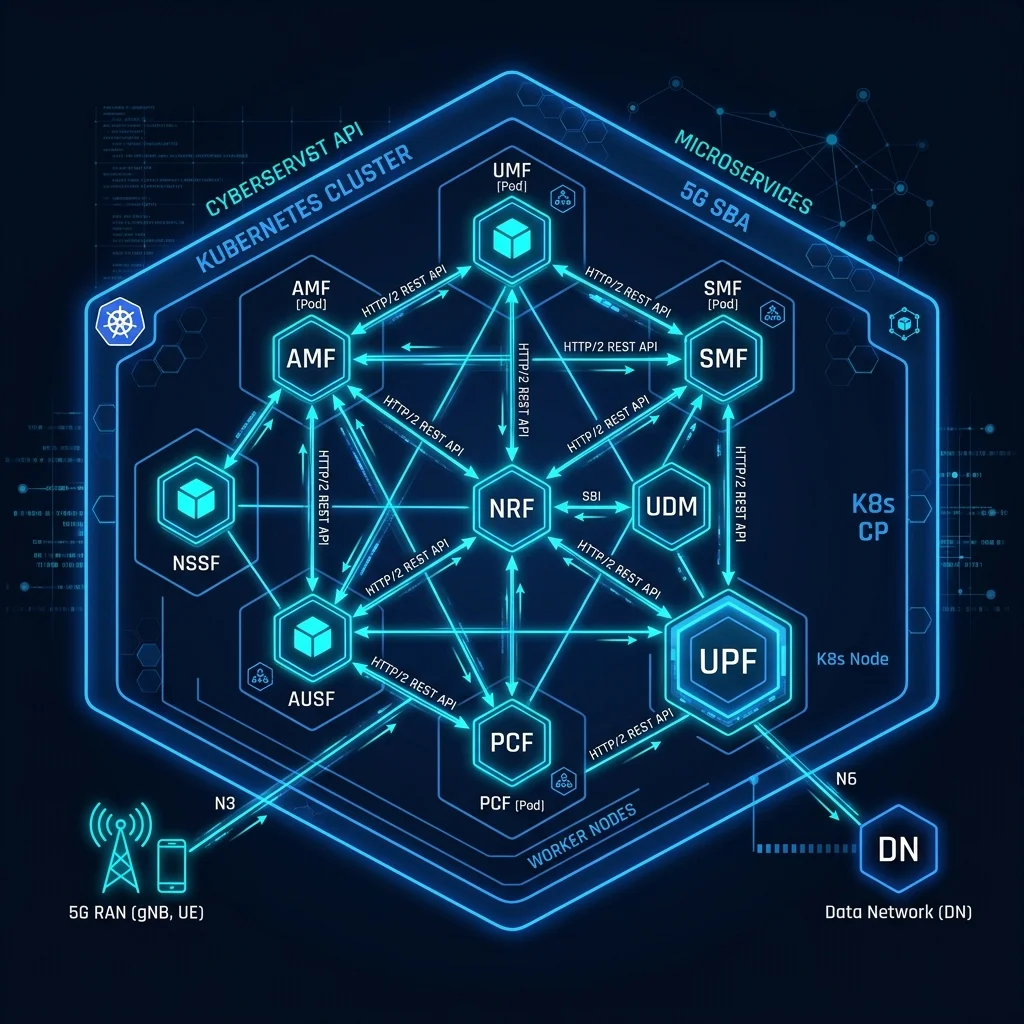
Security Operations Centers (SOCs) in standard enterprise IT environments rely on a mature ecosystem of endpoints, SIEMs, and threat intelligence. However, for a Mobile Network Operator (MNO), standard enterprise feeds are fundamentally blind. They do not monitor SS7 signaling queries, Diameter location tracking, GTP-U tunnel hijacks, GTP-C signaling storms, IMSI catcher deployments, or rogue network functions within the 5G Service Based Architecture (SBA).
To secure core networks and prioritize cellular security alerts, telecom security teams must look beyond generic indicators of compromise (IoCs) and build a specialized, curated library of telecom threat intelligence resources.
MNO SOC: Signaling Threat Intelligence Feed Template
Download our structured MISP taxonomy and STIX 2.1 profiles tailored for mapping telecom-specific signaling threats (SS7, Diameter, GTP-C) to SIEM rule matrices.
This resource details the top 10 specialized intelligence sources required by modern telecom security groups. By integrating these assets, MNO SOC teams can move from passive infrastructure logging to active threat mitigation, effectively identifying signaling intercept, rogue baseband queries, and inter-operator roaming exploits.
- Generic threat feeds lack context on signaling protocols (SS7/Diameter/GTP) and cellular vulnerabilities.
- Curated intelligence is essential for accurate SOC alert prioritization in complex multi-generational cores.
- Open source taxonomies (like MISP telco extensions) allow automated indicator ingestion.
- High-fidelity threat intelligence maintenance and updates require quarterly mapping to local 5G network security architecture.
- Specialized integrations enable proactive defenses against IMSI catchers and RAN air interface attacks.
The Core Deficit: Limitations of Generic Threat Intelligence
Standard commercial threat intelligence platforms (TIPs) track domains, IPs, file hashes, and registry keys associated with corporate IT ransomware, phishing, and endpoint malware. While critical for the MNO's enterprise office network, they offer zero protection for the core telecom network.
The limitations of generic threat intelligence manifest in three main areas:
- Protocol Blindness: Standard SIEM and TIP setups do not ingest SCTP, M3UA, Diameter, or GTP-C packet streams, meaning they cannot parse signaling indicators.
- Missing Cellular Entities: IoCs representing cellular network targets—such as international mobile subscriber identities (IMSIs), MSISDNs, Global Titles (GTs), Point Codes, or Cell-IDs—do not exist in generic schemas.
- No RAN Coverage: IT intelligence cannot detect an RF signal anomaly, a rogue base station deployment, or a beamforming hijacking attempt.
For effective SOC alert prioritization, a telecom security team must separate enterprise IT background noise from high-severity network core compromises.
Technical Comparison: IT vs. Curated Telecom Threat Intel
| Threat Vector | IT Threat Intel Coverage | Curated Telecom Threat Intel Coverage | MNO SOC Impact |
|---|---|---|---|
| Phishing / Malware | Excellent (Domain & IP tracking) | Low (Out of scope) | Low for network core, High for corporate IT |
| IMSI Catchers & Rogue RAN | None | Detailed (RF profiles, LAC/CellID tracking) | High (Prevents corporate and subscriber tracking) |
| SS7 location tracking | None | Comprehensive (Global Title mapping, SCCP calling) | Critical (Stops inter-operator tracking networks) |
| Diameter Roaming Exploit | None | Comprehensive (S6a/S9 interface signaling anomalies) | Critical (Blocks subscriber profile manipulation) |
| 5G SBA API Hijacking | Minimal (Generic REST) | Complete (SBI JSON-LD, OpenAPI definitions) | High (Protects containerized 5G Core Functions) |
10 Specialized Telecom Threat Intelligence Resources
To overcome these gaps, modern mobile operators leverage specialized telecom threat intelligence resources to build custom rulesets for signaling firewalls, Intrusion Detection Systems (IDS), and specialized telco probes.
1. GSMA T-ISAC (Threat Intelligence Sharing and Analysis Center)
- Overview: The GSMA Threat Intelligence Sharing and Analysis Center is the primary global, central hub for sharing threat information within the mobile operator community. It hosts submissions detailing real-world signaling attacks, mobile malware variants, advanced persistent threat (APT) campaigns targeting carrier core environments, and handset fraud profiles.
- MNO SOC Use Case: The SOC uses T-ISAC intelligence to cross-reference active attacks observed globally against local telemetry. It leverages the Traffic Light Protocol (TLP) structure to anonymously share indicators and ingestion schemas.
- Key Threat Indicators: APT indicator campaigns, custom telco malware hashes (e.g., Simjacker indicators), malicious roaming Global Titles, and active inter-carrier interconnect bypass vectors.
2. 3GPP SA3 (Security Working Group) Technical Specs
- Overview: The 3GPP SA3 working group defines the cryptographic security specifications, protocols, and architectural security standards for modern mobile generations (3G, 4G, and 5G).
- MNO SOC Use Case: Security teams translate SA3 specifications and technical studies (such as TS 33.501 for 5G Core security and TS 33.511 for gNodeB security) into active auditing benchmarks. Changes, modifications, and vulnerability studies published by SA3 provide early notice of protocol vulnerabilities.
- Key Threat Indicators: Specification vulnerabilities, structural protocol design flaws, weak cryptographic suites, and reference network threat models.
3. TelcoSec Labs Curated Threat Intelligence Feed
- Overview: As a premium, highly specialized curated threat intelligence subscription, TelcoSec Labs provides MNO security groups with raw telemetry and detection signatures targeting deep signaling and RAN layers.
- MNO SOC Use Case: SOC teams inject this feed directly into edge signaling firewalls and Intrusion Detection Systems. It delivers real-time protection signatures for packet inspection rules, ensuring immediate mitigation of zero-day protocol exploits.
- Key Threat Indicators: Rogue base station RF profiles, signature rules for GTP-U hijacking, real-time lists of compromised Global Titles generating abusive SS7 location requests, and baseband modem firmware exploit catalogs.
4. MISP (Malware Information Sharing Platform) Telco Taxonomies
- Overview: MISP is an open-source threat sharing platform that supports specialized telecommunications security taxonomy extensions maintained by global carrier groups.
- MNO SOC Use Case: Standardizes machine-readable threat indicator formats. The SOC maps incoming telco indicators to security orchestration configurations for rapid, automated security system provisioning.
- Key Threat Indicators: Cell Global Identifiers (CGIs) for rogue base stations, IMSIs, MSISDNs, Diameter Application IDs, and SS7 Translation Types.
5. CISA & ENISA Telecom Sector Security Guidelines
- Overview: The U.S. Cybersecurity and Infrastructure Security Agency (CISA) and the European Union Agency for Cybersecurity (ENISA) publish authoritative guidelines, sector risk assessments, and incident report compilations for critical infrastructure.
- MNO SOC Use Case: Provides the structural framework for local compliance and risk mapping. Threat hunters use these guidelines to model long-term risks against regional network configurations.
- Key Threat Indicators: Strategic national security threat matrices, annual reports of telecom outages, critical vulnerabilities in containerized network functions, and RAN deployment risk analysis.
6. RIPE NCC & Regional Internet Registries Routing Registries
- Overview: Regional registries (including RIPE, ARIN, and APNIC) manage public IP addressing and routing registries (IRR) that map global internet routing paths.
- MNO SOC Use Case: Ingested by network infrastructure teams to prevent BGP route leaks and prefix hijacking. The SOC monitors these records to ensure signaling traffic over IP-based backbones (like SIGTRAN and Diameter over IPX) is not intercepted.
- Key Threat Indicators: Route Origin Authorizations (ROAs), RPKI validation failures, suspicious route leaks, and rogue autonomous system (AS) announcements.
7. ITU-T Security Standards & Circulars
- Overview: The International Telecommunication Union's Standardization Sector (ITU-T) Study Group 17 (SG17) coordinates global standards for cybersecurity, data security, and telecommunications network integrity.
- MNO SOC Use Case: Establishes baseline security requirements and inter-operator security principles. SOC analysts consult ITU-T circulars to design audit templates for signaling links and carrier-to-carrier interfaces.
- Key Threat Indicators: Standard compliance frameworks, security benchmarks for Software-Defined Networking (SDN), and trust relationship profiles for transit links.
8. Shodan & Censys (Custom Telco Port Filters)
- Overview: Public scanning systems that index open ports and device banners across the IPv4 and IPv6 internet space.
- MNO SOC Use Case: The SOC runs automated daily queries using customized filters to discover exposed signaling ports and management portals across their assigned IP blocks. This prevents external exposure of the signaling infrastructure.
- Key Threat Indicators: Exposed SCTP ports (2904), GTP-C (2123), GTP-U (2152), and Diameter (3868) links on public network perimeters.
9. Signaling Interconnect Probe Feeds
- Overview: Real-time passive signaling capture points deployed at STP (Signal Transfer Point), DRA (Diameter Routing Agent), or SEPP (Security Edge Protection Proxy) gateways.
- MNO SOC Use Case: Generates proprietary, real-time telemetry. The SOC monitors interconnect probe feeds to analyze packet headers on incoming inter-operator traffic for anomaly detection.
- Key Threat Indicators: Malicious routing queries (
AnyTimeInterrogation,ProvideSubscriberInfo), abnormal SCCP calling party configurations, and GTP-C signaling storms.
10. CTIA Threat Intelligence Reports
- Overview: The Cellular Telecommunications and Internet Association (CTIA) facilitates threat sharing and security guidelines focused on the wireless ecosystem.
- MNO SOC Use Case: Informs device-level security strategies. The SOC tracks CTIA reports to identify mass-consumer mobile malware, SIM swapping networks, and SMS/MMS phishing campaigns.
- Key Threat Indicators: Mass SMS spam campaigns, SIM swap operational profiles, device security vulnerabilities, and IMEI blacklist updates.
Telecom Security Team Use Cases
Incorporating specialized telecom threat feeds enables several critical telecom security team use cases:
- Rogue Base Station Defense: Ingesting localized Cell-ID lists of known, authorized towers from cellular inventory databases and cross-referencing them against SDR RF measurements to isolate IMSI catchers.
- SS7/Diameter Intercept Block: Using Global Title intelligence lists to immediately drop incoming MAP
SendRoutingInfoForSMrequests coming from unauthorized SMS gateways trying to intercept SMS-based 2FA codes. - 5G Core Slice Security: Standardizing API schema checks inside the 5G Core, monitoring HTTP/2 REST APIs against known JSON payload injection profiles listed in threat models.
- Roaming Subscriber Protection: Automating detection when a subscriber's IMSI generates location update requests in two different countries simultaneously (impossible travel logic mapped to inter-operator signaling metrics).
Ingestion Architecture & Orchestration Workflows
To translate mobile network operator threat intelligence into active, zero-latency protection, modern MNO SOCs rely on automated threat intelligence ingestion pipelines. These architectures ingestion STIX/TAXII formatted feeds and dynamically provision signaling firewalls.
The Automated Ingestion Pipeline
Key Stages of Ingestion Automation
- Indicator Ingress: High-fidelity indicators (such as malicious Global Titles, rogue base station CGI lists, or compromised IMSIs) are ingested via TAXII protocols from a curated threat intelligence subscription. The indicators are mapped to specialized telco schemas in the Threat Intelligence Platform (TIP).
- Dynamic Alert Prioritization: The TIP filters incoming indicators based on severity. Critical and high-severity signaling indicators bypass manual verification queues to enable immediate blocking, optimizing SOC alert prioritization.
- SOAR Orchestration: A Security Orchestration, Automation, and Response (SOAR) playbook parses the structured indicators and queries the internal network topology to prevent conflicts. It translates threat indicators into vendor-specific firewall configurations.
- Firewall Rule Provisioning: The playbook calls REST APIs on the carrier's edge signaling controllers (such as Signal Transfer Points, Diameter Routing Agents, or 5G Security Edge Protection Proxies) to dynamically block or throttle the target entities.
- Continuous Feedback: Active blocks are logged, and telemetry is sent back to the TIP to calculate indicator decay rates, ensuring that blocklists are regularly updated without creating roaming disruptions.
Best Practices: Threat Intelligence Maintenance and Updates
A threat intelligence system is only as useful as its freshness. Telecom protocol standards change, roaming contracts evolve, and attackers modify their infrastructure.
MNO SOCs must implement a strict timeline for threat intelligence maintenance and updates:
- Daily: Dynamic synchronization of machine-readable feeds (like MISP and TAXII servers) to update IP blocklists, malicious Global Titles, and active SMS spam signatures.
- Weekly: Manual review of dropped signaling packets on signaling firewalls, identifying and whitelisting legitimate roaming partners that misconfigured their headers.
- Monthly: Audit of public scanning footprints (using Shodan/Censys) to verify that internal core nodes have not been exposed to public routing layers during configuration updates.
- Quarterly: Complete mapping of local threat indicators back to the global 5G network security architecture and private LTE/5G lab reference models.
By maintaining high-fidelity, cellular-aware datasets, telecom security teams can transform their MNO SOCs from passive monitoring points into hardened, responsive fortresses.
READY TO HARDEN YOUR MNO SOC?
Enroll in TelcoSec Academy for hands-on threat intelligence ingestion labs, MISP taxonomy integration, and live signaling firewall provisioning exercises.